We use spectroscopic techniques to probe the quantum-scale properties of complex systems. Our research interests lie in the optoelectronic properties of physically intriguing novel materials, involving topics such as photophysical and nano-scale effects, charge-carrier dynamics, polaritonic effects and light harvesting for solar energy conversion. Currently, our works comprises three themes:
Halide perovskites for photovoltaics
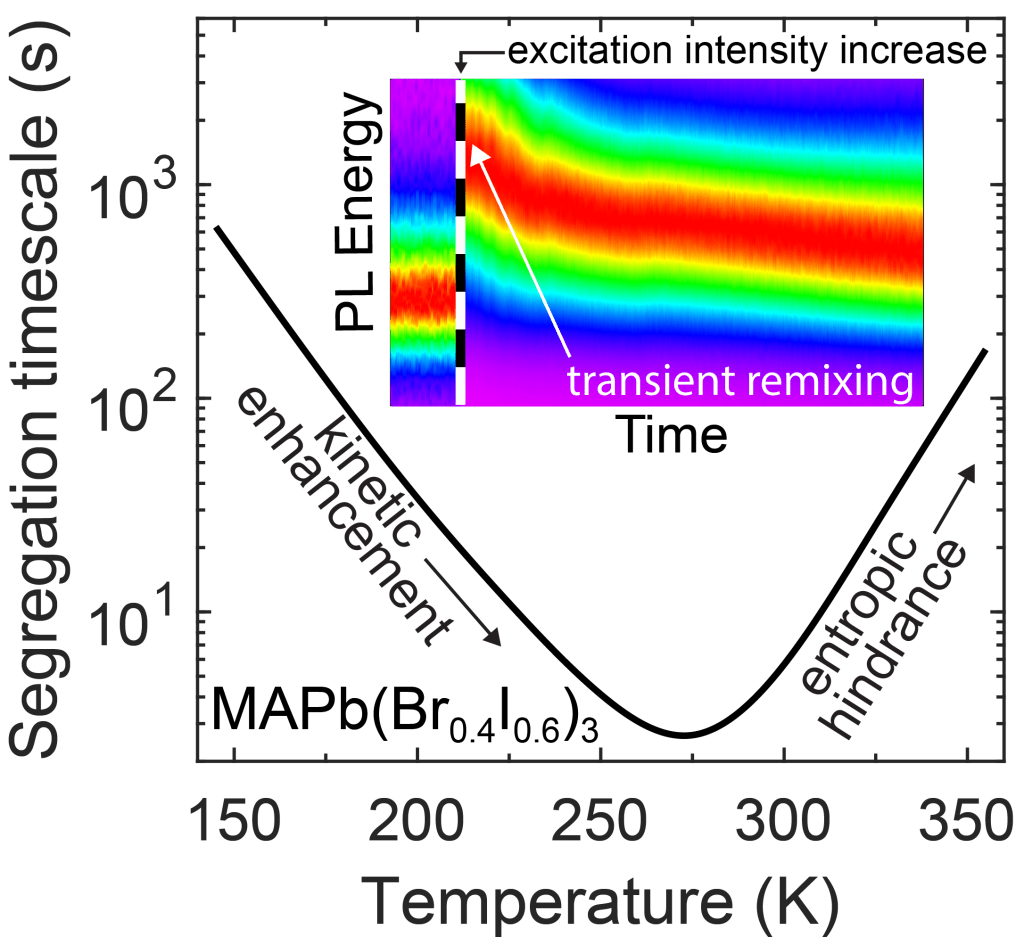
Halide perovskites are a highly promising class of photovoltaic semiconductor. We are carrying out experiments to study the electron motion in these materials to improve their viability in commercial solar cells. We have a particular interest in understanding the mechanism of light-induced halide segregation in mixed-halide perovskites, which is essential for their application in multijunction solar cells.
Gas-phase polaritons
Strong interactions between molecules and confined light can create polaritons: hybrid states of light and matter. Polaritons have been reported to exhibit dramatically different energetics and reactivity from ordinary molecules.

To understand the mechanisms behind polariton-altered chemistry, we will study how gas-phase molecular processes proceed under strong interactions with light. Ultimately, we hope to exploit polaritonic effects to achieve predictive control over chemical reactivity.
Semiconductor polaritons
Polariton physics has great potential as a new platform to selectively control semiconductor properties without needing to modify their structure. Halide perovskites are an ideal testbed for interrogating polaritonic effects. We aim to harness polaritonic effects to enhance the optoelectronic properties of these materials by incorporating them into optical microcavities.
 Adam D. Wright Lab